





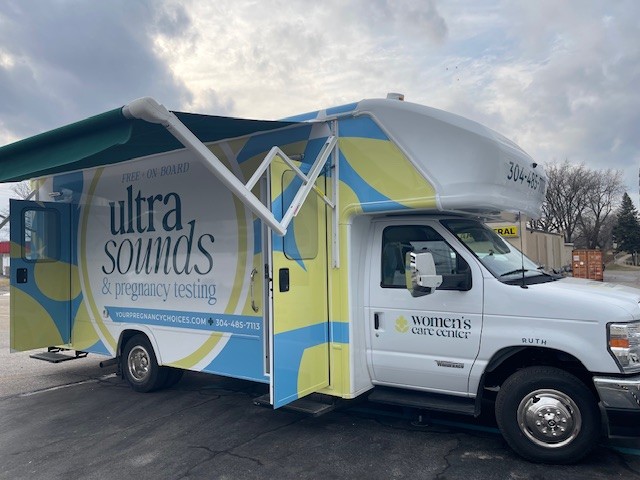
A West Virginia pregnancy medical clinic is going on the road to reach women in areas without adequate access to maternity care.
Women’s Care Center in Parkersburg has obtained a mobile unit and is taking it to serve the most rural counties in its region.
Nearly half or 49.1 percent of the counties in West Virginia are “maternity care deserts,” according to the March for Dimes, defined by the organization as an area having a lack of maternity care resources, specifically no hospitals or birth centers offering obstetric care, and no obstetric providers. As many as 22.2 percent of women in West Virginia have no birthing hospital within 30 minutes, data from the group says.
Women’s Care Center Executive Director Janetta Ross said her board of directors decided to purchase a mobile unit to meet the needs of those who cannot make it to the center, thanks to some generous donations in the fall of 2024.
[Click here to subscribe to Pregnancy Help News!]
Ross contacted Save the Storks, which helped the pregnancy center “get the wheels rolling” on the process. Ross added that Save the Storks has been especially helpful as they have awarded grants for mobile units. Women’s Care Center received a $30,000 grant from Save the Storks. The unit itself cost over $300,000. The donations to the center and other funding have made the mobile unit possible.
Save the Storks also helps centers get the unit revamped and transformed to meet the needs of the clients and sends an individual to train the staff members on how to use it as well.
The unit has been named “Ruth,” and will be parked in Wirt County the second Wednesday of the month. The plan is to have the unit available once a week in Ritchie County as well.
Parkersburg, the location of the brick-and-mortar Women’s Care Center, has a population of 29,000. The next closest pregnancy center with medical services is 45 minutes across the border in Ohio, Ross said.
“Transportation is an issue here for a lot of clients,” Ross told Pregnancy Help News. We have no (public) transportation services here other than maybe a cab, but (the cab) may take hours to get to you.”
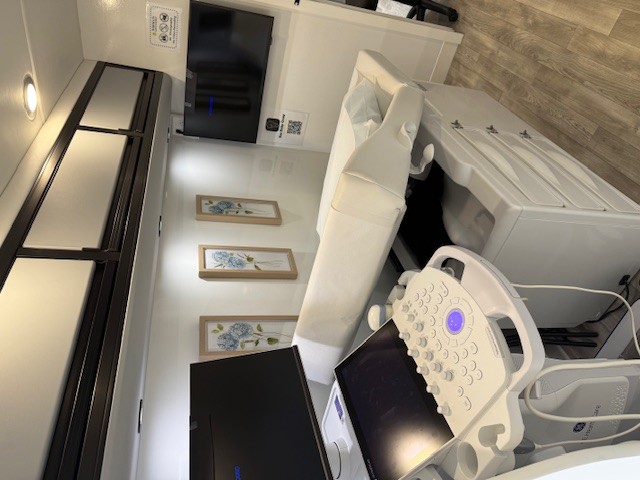
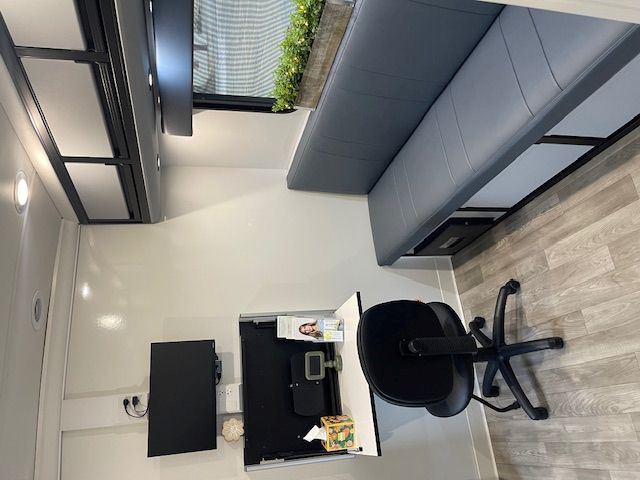
Services that will be provided at the mobile unit include pregnancy tests, STD testing, ultrasounds, consultation for pregnancy options, and some educational possibilities. The unit will have diapers and other materials on board as well.
The lack of transportation in the area is not the only reason for the addition of the mobile unit.
“Transportation is not an issue for women who are getting the abortion pill in the mail.” Ross said.
Women’s Care Center is a member of Abortion Pill Rescue Network, and the first client served by the mobile unit was an Abortion Pill Reversal (APR) client.
“We met the client at a local park,” Ross said, calling this initial opportunity for the mobile unit an "epiphany moment.”
“I’m not really sure that when I thought about the mobile unit that I thought about it being used for APR,” she said.
Women’s Care Center became an APR center in June 2025. The Abortion Pill Rescue Network (APRN) includes nearly 1,500 healthcare professionals, pregnancy centers and hospitals that administer the APR protocol. APR is an updated application of a treatment used since the 1950s to combat miscarriage. It entails prescribing progesterone to counter the effects of the first of two drugs in a chemical abortion, mifepristone. Chemical abortion accounts for most abortions in the U.S.
Tweet This: The mobile pregnancy help unit obtained by Women’s Care Center has created an interest in the area in the pregnancy help movement.
The benefit of the mobile unit in this case is the ability to reach those who took the first abortion pill but are panicked and cannot get to the brick-and-mortar center. If transportation continues to be an issue for the client, as they will need subsequent ultrasounds, the mobile unit is also always a possibility for appointment location.
“We could get a call from someone in Ohio and then they may not be able to make it to the office for two-and-a-half hours,” Ross said. “However, the mobile unit may be able to park in a location halfway in between.”
There are long-term plans to serve a small college campus in Ohio.
“When we go to college we are going to start with STD testing,” Ross said. “We want to make a presence on campus so that we are known first.”
The official launch of the mobile unit in the fourth week in March was advertised with yard signs and notifying agencies in those counties.
“I am going to commit to a community for a year,” Ross said.
She said she wants to give time for responses to build and let the community become aware of their services.
She said there have been dental units who parked in locations briefly in their area and when patients did not accumulate quickly, they closed and did not return. Ross said she does not want to be that hasty, and she wants them to be known as dependable.
“If we thought someone was abortion minded, we would try to find a way to get to them,” she said.
There are, however, limitations and the unit cannot be chasing after clients throughout the area.
“We are trying not to put a lot of pressure on ourselves,” in terms of how many locations or days to have the mobile unit open, Ross said.
Two staff members will be aboard the unit for now.
Ross acknowledged there will be a learning curve in how best to be available for and serve clients.
Staff will work with a midday schedule at first. Clients can schedule ahead or walk-in.
Folks may wonder if this effort is worth the cost. Some may assume a mobile unit is most effective in an urban area along a busy street.
Ross said the concept of being able to take an ultrasound machine anywhere is reason enough to believe a rural unit will still be useful.
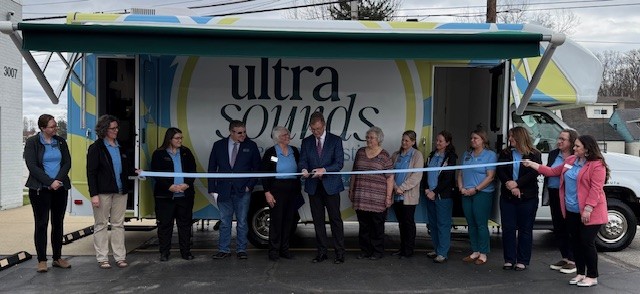
A plus to having the unit includes the outward sign of serving clients to the center’s donor base, she said. Churches and those willing to support the pregnancy center’s outreach will recognize its presence in their community and will be grateful for the efforts.
“I’ve had a couple folks give to our center because of the mobile unit,” Ross said. “It has created an interest in the pregnancy help movement.”
Ross said Women’s Care Center will have the unit parked outside the center’s annual banquet later this year for supporters to tour.
Editor's note: Heartbeat International manages the Abortion Pill Rescue® Network (APRN) and Pregnancy Help News. Heartbeat is currently the subject of two lawsuits brought by state AGs concerning sharing information about Abortion Pill Reversal.