


I have been working as a medical translator for years, helping patients and healthcare professionals understand each other in situations that often carry life-changing weight. I thought I understood not just the language of medicine, but its deeper meaning related to those receiving treatment.
Everything changed the day my two worlds met: when I became a patient, and more to the point, a mother who was left in a state of uncertainty after a medical diagnosis.
Where two worlds collided
As a medical translator, I had always served as a bridge between clinical language and patients’ experience. I interpreted diagnoses, treatment options, and complicated conversations regarding rare conditions.
However, I felt that distance between my professional role and personal life suddenly disappear when I became pregnant and was informed that my unborn baby could have Edwards Syndrome. The words I had translated a million times before were no longer abstract but very personal.
Entering the world of medical translation
My interest in medical translation started with an interest in language and science. As time progressed, I was assigned to work on complex cases, genetic disorders, rare cases, and high-risk pregnancy. I had translated discussions about prognosis, survival, and difficult decisions, and I believed I understood them.
But intellectually knowing something is one thing, and living it is another.
Translating a diagnosis versus living it
I was clear and composed in my professional life and handling of each case. I focused on accuracy, without emotional involvement.
However, when I was pregnant and received the potential Edwards Syndrome diagnosis, I sensed the emotional burden of each word.
Terms such as “risk,” “abnormality,” and “limited survival” were no longer clinical terms but horrific ones. I finally truly realized how confusing medical information could be to patients and families.
[Click here to subscribe to Pregnancy Help News!]
The diagnosis: Discovering Edwards Syndrome
The suspicion of Edwards Syndrome was raised during a regular prenatal examination. As a translator, I started to recollect case studies, survival rates, and medical texts. But it was fear that overcame me as a mother receiving the diagnosis.
My thoughts were torn between my professional knowledge and my personal fears. I began to obsessively research, trying to make sense of the data, but only found more uncertainty. In that phase, what surprised me the most was how isolating everything felt. I had information, I had medical knowledge, but I still felt lost at times.
It made me realize that in moments like these, families don’t just need facts—they need support, clarity, and someone who can help them make sense of it all.
The hardest question I never expected to face
The question that kept coming back to me with this was how would I ever be able to give my child a life like other children? It was not just a thought, but a constant weight that followed me through every moment.
I had interpreted similar concerns for others in my professional life but facing it myself felt completely different. There is no simple way to deal with a question like this, it is shaped by medical guidance, emotional strength, family support, and faith.
What real-life cases taught me
In the course of my research, I came across a case that altered my view. It was that of an adult with the same condition, who had overcome the odds due to the never-ending efforts of her parents. This narration contrasted with the statistics that I had read. It made me remember that medical data can guide me, but it does not determine all the outcomes. Every diagnosis is integrally associated with an individual patient’s story.
Importance of medical guidance and faith
During this experience, I greatly depended on the health practitioners. Prenatal counselling was essential to make me aware of the risks and opportunities.
Meanwhile, my own ideals and family principles were also very important in the way I interpreted and managed the situation. It was not only medical, but hope, strength, and what we felt we could manage as a family.
Seeking clarity through testing
In order to get to know the state of our baby better, I was subjected to a set of tests, such as non-invasive prenatal testing, Chorionic Villus Sampling, and Amniocentesis. Each test was accompanied by anxiety and hope. The anticipation of the results was like walking a line between fear and hope where each outcome was equally daunting.
When uncertainty turns into a decision
When the results arrived at last, they were a breath of sanity, so sorely wanted.
We got to know that our baby had a chance of surviving. It was neither a guarantee nor free of uncertainties, but it gave us enough clarity to move forward.
We decided to continue the pregnancy, not out of denial, but from a place of informed hope.
Looking back, I understand more clearly how important it is for families to have access to that kind of support. Not just medical explanations, but real guidance, compassion, and space to process what they are going through.
Tweet This: It is important for families to have not just medical explanations, but guidance, compassion, and space to process a prenatal diagnosis.
Preparing for a different kind of parenthood
After we had made our decision, we were no longer afraid and were now preparing.
We started to learn about what kind of medical, emotional, and developmental care our child might need.
I also discovered that I was applying my professional competencies in a different dimension, which was not to translate the information to others, but to myself and my family. This time, it was not only about understanding but making preparations for a life that may seem very different than what we had thought.
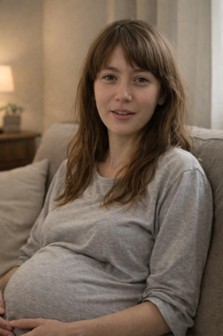
What this journey taught me about rare disease communities
This experience made me open my eyes to the power of families and communities with rare diseases. I also developed a strong admiration towards caregivers who are willing to give their lives to assist their loved ones. Beyond all the diagnoses lies a web of the strength, love, and determination which cannot be “taken down” and put into medical documents.
Final reflection: Beyond translation
I continue to work as a medical translator today, but I am no longer the same person.
This experience has changed my perception of medicine. I no longer see my work as just translating words; I see it as translating experiences, emotions, and meaning. As a mother struggling to find my way, I learned that medicine is not merely about data, but rather about individuals, decisions, and the ability to act despite not knowing what will happen next.
I also came to understand that experiences like this are not just medical, they are deeply human. And in those moments the presence of support, clear communication, and compassionate care can make all the difference.
Editor’s note: Carla E. Jansy is a certified multilingual medical transcriptionist & translator, and health writer. She specializes in translating complex healthcare and medical information into clear, patient friendly language for both patients and healthcare professionals. She also has personal experience with rare disease documentation. Her work bridges communication gaps in sensitive medical cases where precision and clarity are critical. Information, asistance, and support with a prenatal diagnosis are available at PrenatalDiagnosis.org.