



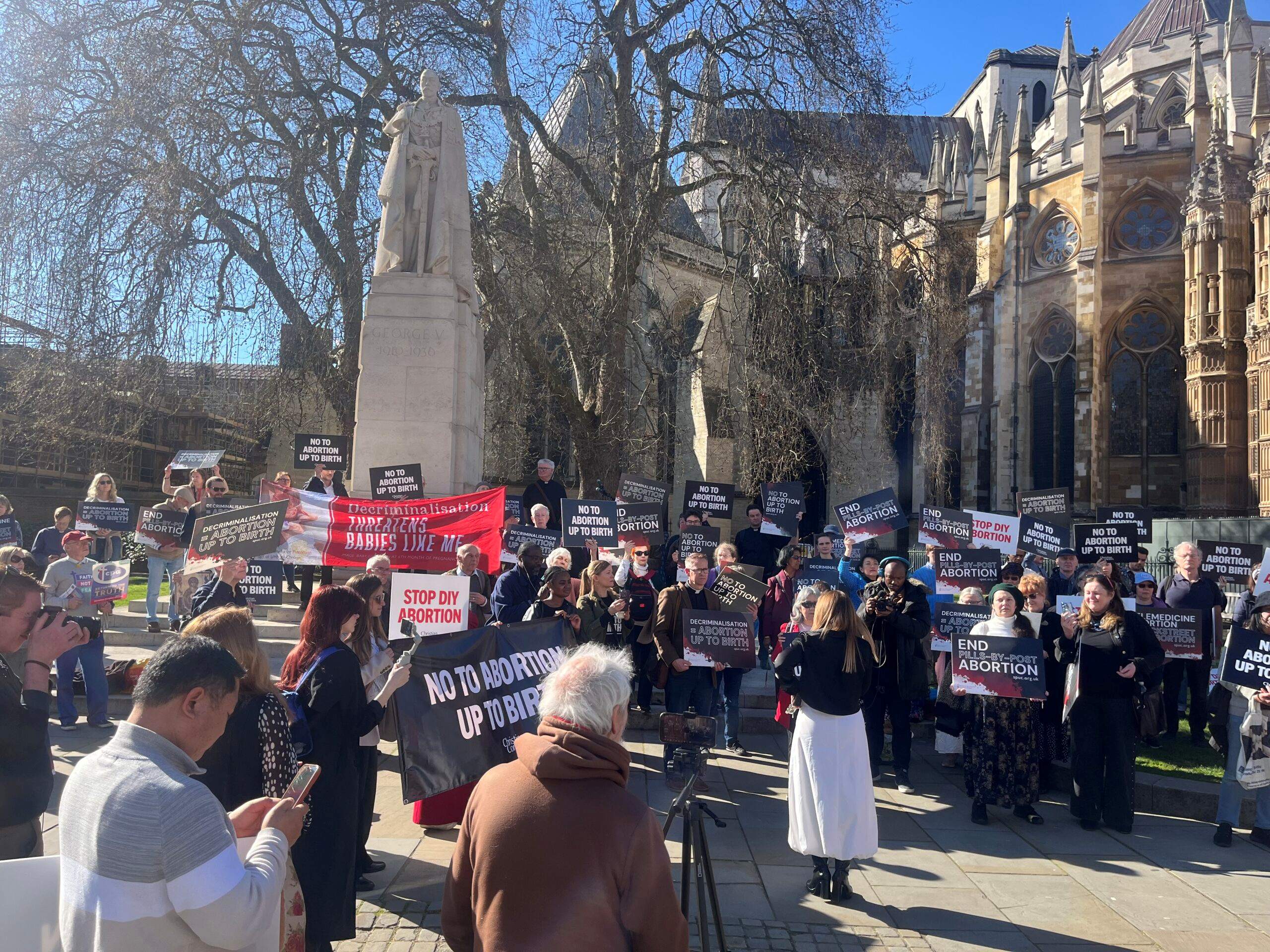
(Christian Concern) On Wednesday 18 March, the House of Lords considered Clause 208 [now 246] of the Crime and Policing Bill, a provision which removes criminal liability from a woman acting in relation to her own pregnancy, effectively decriminalising abortion for the expectant mother even outside the regulatory framework of the Abortion Act 1967. Against that backdrop, peers rejected a series of amendments designed to retain core legal and medical safeguards. By 185 votes to 148, the Lords declined to support Baroness Monckton’s amendment to remove Clause 208 in its entirety from the bill.
This clause will decriminalise abortion up to birth for the mother acting in relation to her own pregnancy.
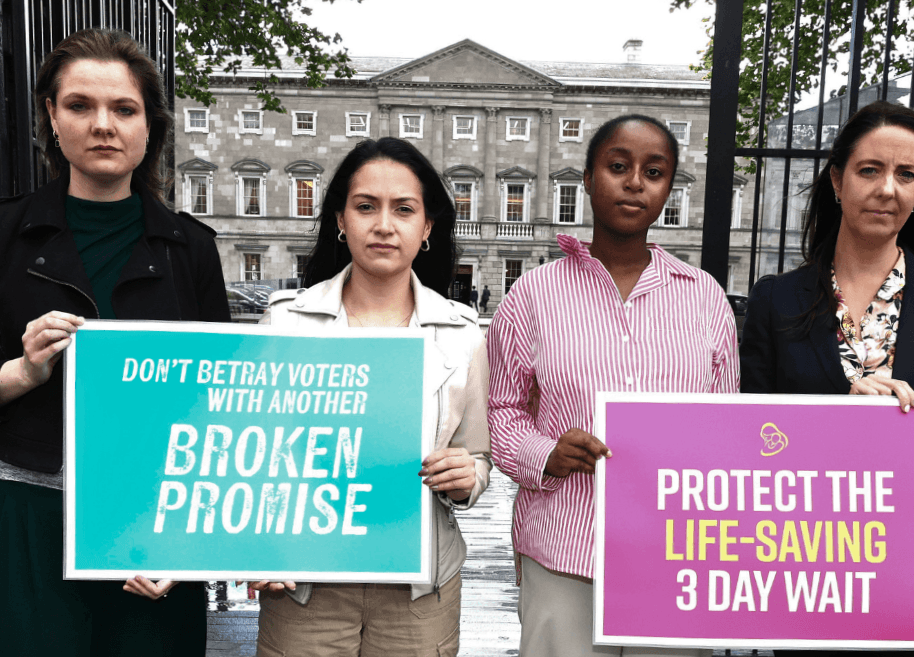
Additionally, and by a further 191 votes to 119, they rejected proposals to reinstate mandatory in-person medical consultations for medical abortions, thereby preserving the “pills by post” telemedicine regime. These decisions ensure that the Bill’s decriminalisation provision will proceed, removing criminal accountability even in cases involving late-term or unsafe abortions, while also declining to restore key clinical safeguards intended to protect women’s health.
The result is not merely a political defeat, but a profound shift in the legal balance the Abortion Act 1967 was supposed to create – with the act of abortion retained as a criminal offence with certain exceptions in the stated belief that the abortions occurred thereafter would be ‘safe, legal and rare’.
[Click here to subscribe to Pregnancy Help News!]
The consequences are real
The consequence of these decisions is not a neutral expansion of autonomy, but a serious erosion of safety and humanity within the law.
By removing criminal accountability while leaving a regulatory framework formally in place, the law risks creating precisely the conditions it once sought to prevent: unregulated and unsafe abortions. As legal safeguards lose their force, we see the inevitable shift to dangerous self-managed abortions pushing vulnerable women toward practices carrying heightened risks of severe complication, trauma, and even death.
At the same time, the removal of meaningful constraint raises profound moral and legal concerns as to how a civilised system can permit conduct that results in the destruction of unborn children up to the moment of birth, with all the attendant pain and suffering that entails.
Abortion already rampant in the UK
Any claim that further liberalisation is required is easily debunked when viewed against the scale and trajectory of abortion in the United Kingdom. The number of abortions has already reached historically unprecedented levels, with 277,970 abortions recorded in England and Wales in 2023 alone; the highest since the Abortion Act 1967 was introduced and an 11% increase on the previous year.
More broadly, the long-term trend is unmistakable: figures have risen at an alarming rate over time, increasing from around 185,000 annually in 2012 to nearly 278,000 in 2023. There have been more almost 12 million abortions since 1967.
The further liberalisation of abortion law was wholly unnecessary. There was no political reality, imminent or otherwise, in which abortion in this country was at risk of becoming more restrictive. The existing framework already permits widespread access in practice. To pursue radical reform in these circumstances is not a response to need, but an ideological shift.
In stripping away safeguards and risking greater harm to women, the law reflects something closer to a cult-like embrace of abortion, where expansion is pursued unquestioningly, regardless of consequence.
Tweet This: UK law reflects something closer to a cult-like embrace of abortion, where expansion is pursued unquestioningly, regardless of consequence.
Telemedicine Abortions
The introduction of telemedicine abortion during the COVID-19 pandemic already marked a significant departure from established clinical safeguards, permitting women to obtain abortion pills by post without any in-person consultation. This measure was justified by the Government as a necessary and temporary response to the public health emergency. It was swiftly challenged by the Christian Legal Centre through judicial review proceedings, contending that the measures and lack of parliamentary scrutiny lacked legality, safety, and were incompatible with the Human Rights Act 1998. Despite assurances that the scheme was exceptional and would be rolled back once the pandemic subsided, it has since been retained and normalised which is what we always said would happen. What was presented as a limited, emergency measure has instead become a permanent feature of abortion provision, raising legitimate questions as to whether Parliament and the public were misled as to its true and enduring purpose.
The evidence surrounding the “pills by post” scheme reveals a system marked by serious complications, documented instances of fraud, and significant risks to women’s health. Data obtained from the Care Quality Commission shows that, within the first eight months of the scheme, 31 serious incidents were reported involving women suffering complications after early medical abortion, including cases of ectopic pregnancy and pregnancies of unexpectedly advanced gestation. These concerns are reinforced by further FOI-based analyses indicating that women have required hospital treatment for haemorrhage, retained tissue, and sepsis, with hundreds of hospital admissions each month linked to complications from abortion pills taken at home.
The absence of in-person consultation has also enabled clear instances of abuse of the system, including cases where women obtained abortion pills beyond the legal gestational limit, sometimes well into late pregnancy. During its judicial review of the telemedicine abortion regulations, CLC provided evidence of 2 deaths that were a direct result of the pills by post scheme which it had obtained through a freedom of information request. Perhaps even more shockingly, in the first six months alone after telemedicine abortions were introduced, the Department of Health and Social Services revealed that it had been informed by abortion providers that they were aware of at least 52 women in England and Wales who illegally aborted, being prescribed the abortifacient pills after the 10-week legal time limit.
This concern was expressly recognised by Baroness Stroud, who sponsored the amendment to reinstate mandatory in-person consultations and cited a case in which a woman with young children died after taking abortion pills obtained via telemedicine, underscoring the potentially fatal consequences of removing direct clinical oversight.
R v Foster
The failure of the amendment to reinstate in-person medical consultations is particularly tragic, especially when coupled with decriminalisation.
The case of R v Foster brings these concerns into sharp and deeply human focus. Ms Foster obtained abortion pills by post after misleading providers about how far along she was in her pregnancy.
In reality, she was around 32 to 34 weeks pregnant, well beyond the point at which a child can survive outside the womb. After taking the drugs alone at home, she suffered a serious medical emergency and later delivered her baby girl, Lily, who was not breathing. Paramedics attempted to resuscitate her, but she could not be saved. This tragedy did not occur in spite of the system, but because of it. The “pills by post” model, by removing in-person consultation and relying heavily on self-reporting, lacks the most basic safeguards that would detect risk, error, or deception.
Providers such as BPAS, who not only service providers but also active campaigners for expanded abortion access, are placed in a position where robust oversight is weakened, as the growing body of incidents and complications suggests.
What is most troubling is that under a decriminalised framework, conduct of this nature could fall entirely outside the reach of the criminal law. A case that once prompted legal accountability would instead become legally invisible, raising serious questions about how the law can claim to protect women while removing safeguards that exist precisely to prevent such devastating outcomes.
It further raises an equally profound question as to whether we want to live in a society where our lawmakers celebrate the fact that they have made such a tragic and dangerous act legal.
Lack of justification for decriminalisation
The case for decriminalisation collapses entirely when one examines the actual use of the criminal law. Between 2017 and 2024, there were just 26 prosecutions in total: 19 under sections 58 and 59 of the Offences Against the Person Act 1861 (procuring unlawful abortion) and 7 under section 1 of the Infant Life (Preservation) Act 1929 (child destruction).
These figures, drawn over an eight-year period, are vanishingly small. They demonstrate that the law was already applied with extreme restraint, reserved only for the most serious and egregious cases. In these circumstances, decriminalisation cannot be justified as a necessary reform; it removes a safeguard that was rarely used, but critically important when it was.
The passage of Clause 208 bears the hallmarks of a measure rushed through Parliament without the level of scrutiny its gravity demands. A reform of this magnitude, fundamentally altering the legal framework governing abortion, required careful, evidence-based consideration and full parliamentary debate. Instead, it was advanced without adequate examination of its medical, legal, and ethical consequences, leaving significant concerns unaddressed. In doing so, Parliament has legislated in haste on an issue of profound importance, with potentially far-reaching and irreversible effects.
Conclusion
At Christian Concern and the Christian Legal Centre, we have consistently challenged the expansion of abortion, whether in the courts or within the halls of Parliament, and this moment is no different.
Faced with a profound shift in the law, we will continue to pursue every available legal avenue to defend both women’s safety and the protection of the unborn.
This includes, where appropriate, seeking judicial review of the decriminalisation framework once it is enacted and justiciable. The commitment remains unchanged: to stand for those who have no voice, and to ensure that the law does not abandon the most vulnerable, the unborn child, to harm without protection or recourse.
Editor's note: This article was published by Christian Concern and is reprinted with permission.